

STAINLESS INDIA is a leading Stockist & Supplier of all Ferrous & Non-Ferrous Metals.
Contact
+91 97680 42420Location
Office No. 301, 3rd Floor, Praman Heritage, Vitthal Bhai Patel Road, Sikkanagar, Girgaon,Mumbai – 400 004, Maharashtra. India
STAINLESS INDIA is a leading Stockist & Supplier of all Ferrous & Non-Ferrous Metals.
Contact
+91 97680 42420Location
Office No. 301, 3rd Floor, Praman Heritage, Vitthal Bhai Patel Road, Sikkanagar, Girgaon,Mumbai – 400 004, Maharashtra. India

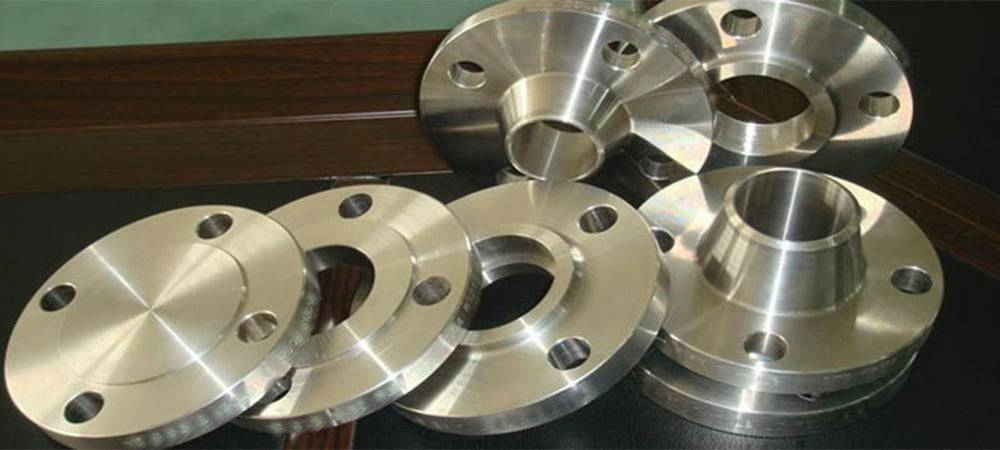
STAINLESS INDIA is recognized as a premier manufacturer and exporter of Nickel Alloy Flanges, providing an extensive selection of high-performance flanges made from materials such as Inconel®, Monel®, Hastelloy®, Alloy 20, SMO 254, and Nickel 200/201.
Our flanges are specifically engineered to endure severe corrosion, elevated
temperatures, and high pressures, making them suitable for critical industrial
applications.
We offer a variety of flanges including weld neck, slip-on, blind, socket weld,
threaded, and lap joint types, all adhering to ANSI/ASME B16.5, B16.47, BS 4504, EN
1092-1, DIN, and other international standards. Our flanges are available in
pressure classes ranging from 150 to 2500, and we also provide custom sizes and
facing types (RF, FF, RTJ).
Our manufacturing process complies with ASTM B564, ASME B16.5, ASME B16.47, DIN, BS,
JIS, and EN standards, ensuring 100% testing and export-grade packaging.
All nickel alloy flanges produced by STAINLESS INDIA are crafted under rigorous
quality control measures and are accompanied by full EN 10204 3.1 / 3.2
certification, along with options for third-party inspection.
Nickel Alloy Flanges are engineered for the most demanding industrial environments where conventional stainless steel components may not provide sufficient corrosion resistance or high-temperature performance. Manufactured from premium grades including Nickel 200 , Nickel 201 , Inconel , Monel , Hastelloy , Alloy 20 and Incoloy®, these flanges deliver outstanding mechanical strength, oxidation resistance and long service life under extreme operating conditions.
Our manufacturing capabilities include Weld Neck, Slip-On, Blind, Socket Weld, Lap Joint, Threaded and Ring Type Joint (RTJ) flanges produced according to ASME B16.5, ASME B16.47, ASTM B564 , EN 1092-1, DIN and BS standards. Every flange undergoes strict dimensional inspection, Positive Material Identification (PMI), hydrostatic testing, visual inspection and full traceability before dispatch.
As an ISO-certified manufacturer and exporter, Stainless India supplies Nickel Alloy Flanges to refineries, offshore platforms, petrochemical plants, fertilizer industries, power generation projects, desalination plants, pharmaceutical facilities, LNG terminals, marine engineering companies and EPC contractors across more than 70 countries. EN 10204 3.1 Mill Test Certificates, third-party inspection and export-grade packaging are available for every shipment.
Nickel Alloy Flanges are selected for applications requiring outstanding corrosion resistance, mechanical strength and long-term reliability under demanding operating conditions. Their performance is influenced by alloy composition, service temperature, pressure, process media and manufacturing quality.
Different nickel alloy grades are engineered to resist oxidation, carburization, chloride attack, reducing acids, seawater corrosion and thermal cycling. Selecting the appropriate alloy helps maximize equipment reliability while minimizing maintenance requirements throughout the operating life of industrial piping systems.
| Family | Performance & Available Grades |
|---|---|
| Inconel® Flanges | Grades: 600, 601, 625, 718, 800, 825. Features outstanding resistance to heat, oxidation, and corrosion. |
| Monel® Flanges | Grades: 400, K500. Excellent performance in saltwater and marine environments. |
| Hastelloy® Flanges | Grades: C22, C276, B2, B3. Superior resistance to acids, chemicals, and harsh media. |
| Other Grades | Nickel 200/201, Alloy 20, Incoloy 800HT / 825, Alloy 600/625, and Custom Superalloys. |
We offer custom CNC-machined flanges and accept drawings for custom machined requirements.
Nickel Alloy Flanges are widely used where exceptional corrosion resistance, high-temperature strength, oxidation resistance, and long-term reliability are essential. Compared to conventional stainless steel flanges, nickel alloy flanges perform significantly better in highly corrosive chemicals, seawater, acids, alkalis, chloride environments, cryogenic temperatures, and elevated pressure applications.
At Stainless India, we manufacture Nickel Alloy Flanges using internationally approved raw materials that comply with ASTM, ASME and EN standards. Every flange is manufactured with strict dimensional accuracy, excellent surface finish and complete material traceability to ensure dependable performance in critical industrial services.
Our production capabilities include Weld Neck, Slip-On, Blind, Socket Weld, Lap Joint, Threaded, Ring Type Joint (RTJ), Spectacle Blind and custom-machined flanges for demanding engineering projects. Pressure ratings are available from Class 150 through Class 2500 with Raised Face (RF), Flat Face (FF) and Ring Type Joint (RTJ) facing options.
Every order is supported by EN 10204 3.1 Mill Test Certificates, Positive Material Identification (PMI), dimensional inspection reports, hydrostatic testing, hardness testing, visual inspection and third-party inspection whenever required by project specifications.
Stainless India manufactures Nickel Alloy Flanges according to internationally accepted ASTM, ASME, DIN, BS and EN standards. Our flanges are produced in various pressure classes, facing types, dimensions and nickel alloy grades to meet the requirements of oil & gas, petrochemical, marine, offshore, power generation and chemical processing industries.
| Product | Nickel Alloy Flanges |
|---|---|
| Available Grades | Nickel 200, Nickel 201, Inconel 600, 601, 625, 718, Monel 400, K500, Hastelloy C22, C276, Alloy 20, Incoloy 800 & 825 |
| Manufacturing Standard | ASTM B564 |
| Dimensional Standards | ASME B16.5, ASME B16.47, EN 1092-1, DIN, BS, JIS |
| Pressure Classes | 150, 300, 600, 900, 1500, 2500 |
| Facing Types | Raised Face (RF), Flat Face (FF), Ring Type Joint (RTJ) |
| Flange Types | Weld Neck, Slip-On, Blind, Socket Weld, Threaded, Lap Joint, Spectacle Blind, Orifice, Long Weld Neck |
| Inspection | PMI, Hydro Test, Visual Inspection, Dimensional Inspection, Hardness Test |
| Certification | EN 10204 3.1 / 3.2 Mill Test Certificate |
| Third Party Inspection | TUV, BV, DNV, Lloyd's Register, SGS |
Choosing the correct flange material depends on the operating environment, corrosion resistance requirements, service temperature, pressure conditions and project life expectancy. Nickel Alloy Flanges are designed for severe industrial environments where standard stainless steel flanges may not provide adequate performance.
| Feature | Nickel Alloy Flanges | Stainless Steel Flanges |
|---|---|---|
| Corrosion Resistance | Excellent | Very Good |
| High Temperature Service | Excellent | Good |
| Marine Applications | Excellent | Good |
| Acid Resistance | Excellent | Moderate |
| Chloride Resistance | Excellent | Moderate |
| Oxidation Resistance | Excellent | Good |
| Service Life | Long | Medium to Long |
| Typical Industries | Offshore, LNG, Chemical, Petrochemical, Marine, Power | General Industrial Applications |
Nickel Alloy Flanges are generally selected for applications involving aggressive chemicals, seawater, high-pressure systems and elevated temperatures where long-term reliability is critical. Stainless Steel Flanges remain an excellent solution for many general-purpose industrial applications, but nickel alloys provide superior performance in highly demanding operating conditions.
Nickel Alloy Flanges are used in critical industrial systems where corrosion resistance, high mechanical strength and long service life are essential. Stainless India supplies engineered nickel alloy flanges for new construction projects, plant expansions, maintenance shutdowns and replacement requirements across domestic and international industries.
Used in offshore platforms, refineries, pipelines, LNG terminals and high-pressure processing equipment operating in corrosive environments.
Suitable for handling acids, alkalis, solvents and aggressive chemicals where conventional materials may fail.
Excellent resistance to seawater corrosion makes nickel alloy flanges ideal for marine piping systems, desalination plants and offshore structures.
Used in thermal, nuclear and renewable power facilities where elevated temperatures and pressures demand reliable flange performance.
Provides dependable performance in ammonia, urea and other corrosive process applications.
Manufactured with precise tolerances and material traceability for demanding processing environments.
Suitable for high-temperature and high-pressure equipment requiring excellent oxidation and corrosion resistance.
Widely supplied to engineering, procurement and construction contractors for industrial piping projects around the world.
At Stainless India, Nickel Alloy Flanges are manufactured using carefully selected raw materials that comply with international ASTM and ASME standards. Every stage of production is monitored by experienced quality personnel to ensure dimensional accuracy, mechanical integrity and complete traceability.
The manufacturing process includes raw material verification, precision forging or machining, CNC finishing, drilling, beveling, facing, dimensional inspection and surface finishing. Depending on the product specification, additional heat treatment and machining processes are carried out to achieve the required mechanical properties and corrosion resistance.
Every flange is inspected before dispatch to ensure compliance with customer specifications and international standards. Material identification, dimensional verification and documentation are maintained throughout production to provide complete traceability for every supplied flange.
| Quality Control Process | Description |
|---|---|
| Raw Material Inspection | Verification of alloy grade and material certificates before production. |
| PMI Testing | Positive Material Identification to confirm alloy composition. |
| Dimensional Inspection | Inspection according to ASME B16.5 and customer drawings. |
| Visual Inspection | Surface quality and workmanship verification. |
| Hardness Testing | Verification of mechanical properties where applicable. |
| Final Documentation | EN 10204 3.1 MTC, inspection reports and traceability documents. |
Selecting the correct Nickel Alloy Flange depends on several engineering factors, including the operating temperature, pressure rating, process media, corrosion resistance requirements and applicable international standards. Choosing the appropriate alloy and flange type helps improve equipment reliability, reduce maintenance and extend service life.
Before placing an order, engineers should evaluate the flange material grade, pressure class, facing type, dimensions, inspection requirements and project specifications. Stainless India assists customers in selecting the most suitable flange solution based on the intended industrial application and operating conditions.
| Selection Factor | Recommendation |
|---|---|
| Operating Temperature | Select a nickel alloy grade suitable for the expected service temperature. |
| Corrosive Environment | Consider Nickel 200/201, Hastelloy, Monel or Inconel based on the chemical media. |
| Pressure Rating | Choose Class 150, 300, 600, 900, 1500 or 2500 according to the system design. |
| Facing Type | Select RF, FF or RTJ based on gasket design and sealing requirements. |
| Applicable Standards | Verify compliance with ASTM B564, ASME B16.5, ASME B16.47 or project specifications. |
| Inspection Requirements | Request PMI testing, EN 10204 3.1 MTC and third-party inspection where required. |
For demanding applications involving seawater, aggressive chemicals, elevated temperatures or critical process systems, consult material specifications before selecting the alloy grade. Matching the correct nickel alloy to the operating environment helps maximize performance, safety and long-term reliability.
Stainless India follows international export packaging practices to ensure Nickel Alloy Flanges reach customers in excellent condition. Every shipment is packed according to the product type, destination and customer requirements to minimize the risk of damage during storage and transportation.
Each flange is clearly marked with the material grade, size, pressure class, heat number and manufacturer's identification to provide complete product traceability throughout the supply chain.
| Export Item | Details |
|---|---|
| Packaging | Wooden boxes, plywood cases, pallets or customized export packing. |
| Product Marking | Grade, size, pressure class, heat number and customer identification. |
| Mill Test Certificate | EN 10204 3.1 / 3.2 available on request. |
| Inspection Documents | PMI reports, dimensional inspection reports and quality certificates. |
| Third-Party Inspection | SGS, BV, TUV, DNV and Lloyd's Register, when specified. |
| Export Documents | Commercial Invoice, Packing List, Certificate of Origin and other documents as required for international shipments. |
We supply Nickel Alloy Flanges to customers across Asia, the Middle East, Europe, Africa, North America and South America, supporting EPC contractors, OEMs, distributors and end users with reliable delivery schedules and complete documentation.
Selecting the correct Nickel Alloy Flange requires careful evaluation of the service environment, operating pressure, temperature, corrosion resistance, flange standard and material grade. Using the correct flange improves plant reliability, reduces maintenance costs and extends equipment life.
Engineers should begin by identifying the process media, such as seawater, acids, alkalis, chlorides or high-temperature gases. Material selection should then be matched with internationally recognized nickel alloy grades including Nickel 200, Nickel 201, Inconel®, Monel®, Hastelloy® and Alloy 20.
Pressure class, facing type and flange design should comply with ASME B16.5 or ASME B16.47 while material specifications should conform to ASTM B564. Projects requiring complete material traceability should also request EN 10204 3.1 Mill Test Certificates, PMI testing and third-party inspection before dispatch.
For offshore, LNG, petrochemical, marine and chemical processing projects, selecting the appropriate nickel alloy significantly improves corrosion resistance, operational safety and long-term reliability under demanding service conditions.
Selecting the correct nickel alloy grade is one of the most important decisions when designing industrial piping systems. Each alloy offers different levels of corrosion resistance, mechanical strength and temperature capability depending on the operating environment.
| Grade | Best Used For | Main Advantage |
|---|---|---|
| Nickel 200 | Caustic chemicals and food processing | Excellent corrosion resistance in alkaline environments |
| Nickel 201 | High-temperature applications | Lower carbon content with improved high-temperature performance |
| Inconel 625 | Offshore and marine systems | Outstanding resistance to seawater and oxidation |
| Monel 400 | Marine engineering | Excellent resistance to seawater corrosion |
| Hastelloy C276 | Chemical processing plants | Exceptional resistance to aggressive acids and chemicals |
| Alloy 20 | Sulfuric acid service | Excellent corrosion resistance in acidic environments |
If you are unsure which alloy is suitable for your project, our engineering team can recommend the appropriate material based on operating temperature, pressure, process media and applicable ASTM or ASME standards.
Although Nickel Alloy Flanges are designed for demanding industrial environments, long-term performance depends on proper material selection, correct installation and routine inspection. Selecting the wrong alloy for the process media or operating conditions can reduce service life and increase maintenance costs.
Regular inspection of flange faces, bolts, gaskets and sealing surfaces helps identify wear before leakage or system failure occurs. Proper bolt tightening sequences, gasket compatibility and alignment during installation are also essential for maintaining leak-free joints.
| Best Practice | Recommendation |
|---|---|
| Material Selection | Select the nickel alloy grade according to temperature, pressure and process media. |
| Correct Gasket Selection | Use a gasket compatible with the flange facing type and operating conditions. |
| Bolt Tightening | Follow the recommended cross-tightening sequence and specified torque values. |
| Routine Inspection | Inspect flange faces, bolts and sealing surfaces during scheduled maintenance. |
| Corrosion Monitoring | Monitor aggressive chemical environments and replace damaged components when required. |
| Documentation | Maintain inspection reports, PMI records and material certificates for complete traceability. |
Periodic inspection, proper storage before installation and selecting the correct nickel alloy grade for the intended application significantly improve service life while reducing unplanned downtime and maintenance costs.
Nickel Alloy Flanges are manufactured in accordance with internationally recognized standards and are available in a wide range of dimensions, pressure ratings and facing configurations. Selecting the correct specification ensures compatibility with piping systems and long-term operational reliability.
| Specification | Details |
|---|---|
| Manufacturing Standard | ASTM B564 |
| Dimensional Standards | ASME B16.5, ASME B16.47, EN 1092-1, DIN, BS, JIS |
| Available Sizes | ½ inch to 60 inch (project dependent) |
| Pressure Classes | 150, 300, 600, 900, 1500 and 2500 |
| Facing Types | Raised Face (RF), Flat Face (FF), Ring Type Joint (RTJ) |
| Inspection | PMI, Visual Inspection, Dimensional Inspection, Hardness Testing |
| Certification | EN 10204 3.1 / 3.2 Mill Test Certificate |
| Third-Party Inspection | SGS, TUV, BV, DNV, Lloyd's Register |
Final dimensions, drilling patterns, facing details and inspection requirements can be customized to meet individual project specifications, applicable codes and customer documentation requirements.
Nickel Alloy Flanges are manufactured in accordance with internationally recognized standards to ensure dimensional accuracy, material quality, pressure integrity and compatibility with industrial piping systems. Selecting flanges manufactured to recognized standards simplifies engineering design, inspection and installation while ensuring long-term operational reliability.
| Standard / Code | Purpose |
|---|---|
| ASTM B564 | Nickel alloy forgings used for flange manufacturing. |
| ASME B16.5 | Dimensions, tolerances and pressure ratings for pipe flanges. |
| ASME B16.47 | Large diameter steel flanges. |
| EN 1092-1 | European flange dimensions and pressure classes. |
| DIN Standards | German dimensional specifications for industrial flanges. |
| BS Standards | British engineering flange specifications. |
| JIS Standards | Japanese Industrial Standards for piping flanges. |
| EN 10204 3.1 | Mill Test Certificate for material traceability. |
Compliance with internationally recognized standards helps ensure interchangeability, quality assurance, pressure integrity and compatibility across global industrial projects. It also simplifies inspection, procurement and maintenance throughout the service life of the piping system.
Proper installation is essential to achieve the expected performance and service life of Nickel Alloy Flanges. Even premium-quality flanges can experience leakage or premature wear if incorrect installation procedures, gasket selection or bolt tightening practices are followed.
Before installation, all flange faces should be inspected for damage, contamination or surface irregularities. The selected gasket should be compatible with the flange facing type, operating temperature, pressure rating and process media. Proper alignment of the piping system is equally important to avoid unnecessary mechanical stress on the flange assembly.
| Installation Step | Recommended Practice |
|---|---|
| Surface Inspection | Ensure flange faces are clean, smooth and free from visible damage before assembly. |
| Gasket Selection | Select a gasket compatible with the pressure class, process fluid and facing type. |
| Bolt Tightening | Use a cross-pattern tightening sequence with calibrated torque values. |
| Alignment | Align piping correctly to avoid introducing unnecessary stress into the flange joint. |
| Pressure Testing | Perform pressure testing according to the applicable project specification before commissioning. |
| Routine Inspection | Inspect bolting, gasket condition and flange faces during scheduled maintenance intervals. |
Following recognized installation procedures and using the correct nickel alloy grade, gasket material and bolting method helps reduce leakage risk, improve sealing performance and extend the service life of industrial piping systems.
Every Nickel Alloy Flange should undergo appropriate inspection and testing to verify material quality, dimensional accuracy and compliance with customer specifications. Inspection procedures help ensure dependable performance in critical industrial applications while maintaining complete material traceability throughout the manufacturing process.
Depending on project requirements, inspection may be carried out during raw material verification, production, machining and final dispatch. Third-party inspection agencies may also witness testing before shipment when specified by the customer.
| Inspection Method | Purpose |
|---|---|
| Positive Material Identification (PMI) | Verifies the chemical composition of the alloy grade. |
| Dimensional Inspection | Confirms compliance with ASME B16.5, ASME B16.47 and customer drawings. |
| Visual Inspection | Checks surface finish, workmanship and visible defects. |
| Hardness Testing | Verifies mechanical properties where applicable. |
| Hydrostatic / Pressure Testing | Performed when required by project specifications or customer requirements. |
| Third-Party Inspection | Available through SGS, TÜV, BV, DNV and Lloyd's Register upon request. |
| Mill Test Certificate | EN 10204 3.1 / 3.2 documentation providing complete material traceability. |
Combining internationally recognized inspection methods with complete documentation helps ensure Nickel Alloy Flanges meet project specifications, applicable standards and customer quality requirements before delivery.
Engineers, EPC contractors and procurement teams frequently evaluate Nickel Alloy Flanges based on service conditions, international standards and long-term reliability. The following technical guidance answers some of the most common engineering questions encountered during material selection.
High Nickel Alloy grades manufactured with precise tolerances and 100% testing.
Precision CNC-Machined flanges featuring perfect facing for leak-proof installations.
Exports to UAE, Saudi Arabia, Europe, Africa, USA, and Asia with fumigated wood packing.
Custom sizes, specialized coatings, and marking available upon specific request.
We export to more than 70+ countries:
USA • UK • Germany • Italy • UAE • Saudi Arabia • Qatar • Oman • Kuwait • Singapore • Malaysia • Indonesia • Australia • South Africa • Brazil • Mexico • India
Stainless India manufactures and supplies a complete range of nickel alloy piping products designed for demanding industrial applications. Customers purchasing Nickel Alloy Flanges also frequently require matching pipes, fittings, fasteners and forged fittings manufactured to compatible ASTM and ASME standards.